

The Wisdom of Empathy in "The Lord of the Rings"—Part 2
How Empathy underpins the virtue of Pity for the Wise of Middle-Earth
Mae govannen, friends! Josh here with a the second of two guest posts from Benjamin Wheaton, a medieval historian living in Toronto. He is the author of Suffering, Not Power: Atonement in the Middle Ages and other works on theology and society in Late Antiquity and the early Middle Ages. A Tolkien fanatic since age 12, when he was bullied into reading The Lord of the Rings by his older sister, he also enjoys reading stories about Nelson's navy and a certain village of irreductibles Gauloises in the time of Julius Caesar. Some of his articles may be found on his academia.edu webpage: https://utoronto.academia.edu/BenjaminWheaton.
Today he’s got the second of two pieces on ‘The Wisdom of Empathy in The Lord of the Rings’ that I’m sure you’ll find both interesting and inspiring.
Miss part 1? You can read it here:


The Wisdom of Empathy in ‘The Lord of the Rings’—Part 2
How Empathy underpins the virtue of Pity for the Wise of Middle-Earth
by Benjamin Wheaton
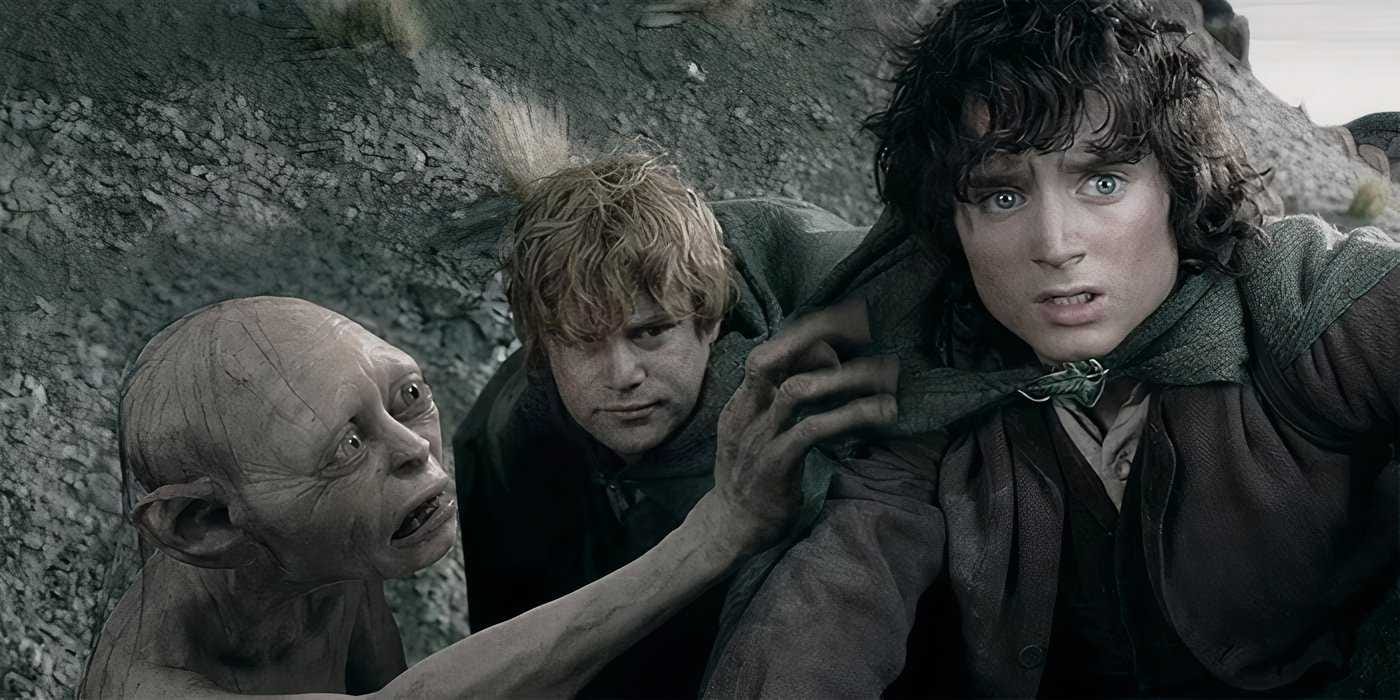
In the first part of this series, we looked at how, for J.R.R. Tolkien, the virtue of pity is dependent on the presence of empathy as its fuel. Empathy-fuelled pity is a characteristic of the Wise in Middle-Earth, most fully exemplified in Gandalf, but also shown by Galadriel and Aragorn. Empathy is not simply discerning what someone else is thinking, but feeling along with them and being moved emotionally. This then drives the action of pity, which causes one to act (or refrain from acting) in such a way as to disadvantage oneself. In The Lord of the Rings, such empathy-fuelled pity not only characterizes the Wise, it also results in both spiritual and temporal success. Those who show the ability to empathize with another are ennobled, and rewarded. The quest to destroy the Ring cannot be successful, as we will see, unless empathy is felt and pity is shown. In particular, the empathy shown for Gollum by various characters in The Lord of the Rings is central to the plot for two reasons: first, it directly results in the successful completion of the Quest; and second, it is a key aspect of the ennoblement of the wisest of the hobbits, namely Frodo.
The Empathy of Bilbo
Gollum is shown empathy first by Bilbo in The Hobbit, the motivation for his act of pity in the tunnels of the goblins:
He must stab the foul thing, put its eyes out, kill it. It meant to kill him. No, not a fair fight. He was invisible now. Gollum had no sword. Gollum had not actually threatened to kill him, or tried to yet. And he was miserable, alone, lost. A sudden understanding, a pity mixed with horror, welled up in Bilbo’s heart: a glimpse of endless unmarked days without light or hope of betterment, hard stone, cold fish, sneaking and whispering.1
This passage was written after the publication of The Lord of the Rings, as part of Tolkien’s revisions of The Hobbit to bring it in line with the later tale. And it is significant that this extensive description of Bilbo’s empathy, “a pity mixed with horror,” echoes the descriptions of the empathy that Gandalf, Frodo and (eventually) Sam have towards Gollum. Bilbo’s empathy is the first in the long chain that spares Gollum’s life, and results in the Ring’s successful destruction. It also leads to Bilbo’s eventual deliverance from the Ring, since it caused him to have pity on Gollum and so start his possession of it by an act of virtue.
The Empathy of Frodo
Gandalf’s sparing of Gollum out of pity, refusing to allow him to be put to death by the Elves of Mirkwood, has already been described. Part of this was motivated by Gandalf’s empathy for Gollum’s plight, though part too was the wizard’s feeling that Gollum had some role to play yet in the Ring’s story: “He may play a part yet that neither he nor Sauron have foreseen,” he says at the Council of Elrond.2 But Frodo fails to grasp the wisdom of this at first: “Now at any rate he is as bad as an Orc, and just an enemy. He deserves death.”3 It is therefore a key moment in the story when Frodo, finally seeing Gollum in the flesh, is able to empathize with him and thus to pity him: “If we kill him, we must kill him outright. But we can’t do that, not as things are. Poor wretch! He has done us no harm.” Frodo then recollects his conversation with Gandalf about Gollum, and responds at long last as Gandalf would have desired: “I will not touch the creature. For now that I see him, I do pity him.”4 Sam thinks this is foolishness, but Frodo recognizes something at this point that Sam does not: his empathy drives a sense of pity that has a value in itself, and true wisdom is taking into account the spiritual world and the rules governing it. As Tolkien writes,
At any point any prudent person would have told Frodo that Gollum would certainly betray him…To ‘pity’ him, to forbear to kill him, was a piece of folly, or a mystical belief in the ultimate value-in-itself of pity and generosity even if disastrous in the world of time. He did rob him and injure him in the end – but by a ‘grace,’ that last betrayal was at a precise juncture when the final evil deed was the most beneficial thing any one could have done for Frodo! By a situation created by his ‘forgiveness,’ he was saved himself, and relieved of his burden.5
Frodo was saved from his final succumbing to the power of the Ring by his wise act of empathizing with, and then pitying, Gollum—much as Bilbo escaped from the Ring’s power due to his act of empathy-fuelled pity.
The Empathy of Sam
Sam is most resistant to pitying Gollum, and struggles the most against having empathy for him. By no means does this mean that Sam doesn’t perceive part of what Gollum is thinking; when Gollum offers to lead them to Cirith Ungol rather than try to enter in at the Black Gate, Sam rightly guesses Gollum’s motives:
Sam’s guess was that the Sméagol and Gollum halves (or what in his own mind he called Slinker and Stinker) had made a truce and a temporary alliance: neither wanted the Enemy to get the Ring; both wished to keep Frodo from capture, and under their eye, as long as possible – at any rate as long as Stinker still had a chance of laying hands on his ‘Precious.’6
Yet something critical to empathy is lacking to Sam’s shrewd perception: an ability to feel with Gollum. And at the point of the story that Tolkien thought was perhaps the greatest tragedy in The Lord of the Rings, Gollum’s near-repentance spoiled by Sam’s harshness, this lack of empathy had dire consequences. We are given a vision of what that empathy should have looked like from the perspective of the narrator:
“For a fleeting moment, could one of the sleepers have seen him, they would have thought that they beheld an old weary hobbit, shrunken by the years that had carried him far beyond his time, beyond friends and kin, and the fields and streams of youth, an old starved pitiable thing.”7 Sam did not experience this empathetic vision, and so Gollum was irrevocably lost.
But Sam did eventually come to exercise the virtue of empathy, just when it was most necessary for the success of the quest. On Mount Doom, when he has Gollum at his mercy, at last he appreciates his plight and spares his life:
It would be just to slay this treacherous, murderous creature, just and many times deserved; and also it seemed the only safe thing to do. But deep in his heart there was something that restrained him: he could not strike this thing lying in the dust, forlorn, ruinous, utterly wretched. He himself, though only for a little while, had borne the Ring, and now dimly he guessed the agony of Gollum’s shrivelled mind and body, enslaved to that Ring, unable to find peace or relief ever in life again. But Sam had no words to express what he felt.8
Sam has not progressed as far as Frodo on the path of wisdom; the fact that he did not know how to put his feeling of pity into words is proof of that. Frodo, the friend and student of Gandalf, did know; but as for Sam, Tolkien wrote:
Sam was cocksure, and deep down a little conceited; but his conceit had been transformed by his devotion to Frodo…It prevented him from fully understanding the master that he loved, and from following him in his gradual education to the nobility of service to the unlovable and of perception of damaged good in the corrupt.9
Sam’s moment of empathy leading to pity thus comes too late for Gollum’s salvation, and is imperfectly perceived by Sam himself: “Sam had no words to express what he felt.” What Sam required before being able to empathize with Gollum was a taste of the same experience with the Ring’s power; a taste that is fairly inchoate: “dimly he guessed the agony of Gollum’s shrivelled mind.” Yet it still comes as a moment of moral growth—and of grace—that enables the quest to come to a successful conclusion.
Empathy as Mark of Moral Growth in Frodo
Sam is the only real “commoner” in The Lord of the Rings, and his dim grasp of empathy is just the start of his progress towards wisdom, as part of his association with the “great” of Middle-earth and their affairs. The other hobbits, Frodo in particular, are “aristocrats,” but an aristocracy of a “common” people, whose association with the “great,” Gandalf in particular, elevates them. The juxtaposition of the “common” with the “great” is one of the key themes of The Lord of the Rings. As Tolkien wrote:
This last great Tale [The Lord of the Rings] is to exemplify most clearly a recurrent theme: the place in ‘world politics’ of the unforeseen and unforeseeable acts of will, and deeds of virtue of the apparently small, ungreat, forgotten in the places of the Wise and Great…a moral of the whole…is the obvious one that without the high and noble the simple and vulgar is utterly mean; and without the simple and ordinary the noble and heroic is meaningless.10
More to the point, common characters can develop into greatness in contact with the noble: “There are of course certain things and themes that move me specially. The inter-relations between the ‘noble’ and the ‘simple’ (or common, vulgar) for instance. The ennoblement of the ignoble I find specially moving.”11 Empathy leading to pity characterizes the Wise, as we have seen; and a key element in the ennoblement of the wisest of the hobbits, Frodo, is mastering this virtue.
Though skeptical of Gandalf’s pity at the beginning of the story, Frodo learns to empathize with Gollum and show pity. This results in the successful completion of the Quest, but it also results in his being numbered among the Wise of Middle-Earth. He is greater than the other hobbits precisely because of his ability to empathize and show pity, a virtue that the others still lack in full. This becomes clear near the end of the book, when the Shire has been taken over by Saruman’s ruffians thanks to being invited in by Frodo’s relative Lotho Sackville-Baggins. After the hobbits have dealt with a small party of men trying to arrest them, it is Frodo who grasps what has really happened:
“Well, we’ve come back none too soon,” said Merry.
“Not a day too soon. Perhaps too late, at any rate to save Lotho,” said Frodo. “Miserable fool, but I am sorry for him.”
“Save Lotho? Whatever do you mean?” said Pippin. “Destroy him, I should say.”
“I don’t think you understand things, Pippin,” said Frodo. “Lotho never meant things to come to this pass. He has been a wicked fool, but he’s caught now. The ruffians are on top, gathering, robbing and bullying, and running things or ruining things as they like, in his name. And not in his name even for much longer. He’s a prisoner in Bag End now, I expect, and very frightened. We ought to try and rescue him.”12
Pippin cannot grasp what Lotho is feeling: all he can see is his crimes. But Frodo, with his greater wisdom and therefore greater ability to empathize, can pity him and desire to save him from his predicament.
The climactic revelation of Frodo’s wisdom is not, however, in his realization of Lotho’s plight, but in his sparing the life of Saruman. After the fallen wizard has gloated at the door of Bag End about the ruin he he wrought in the Shire, Frodo orders him to leave, much against the will of the other hobbits, who wish to kill him. Frodo can pity Saruman for his moral decay: when Saruman says, “I have already done much that you will find it hard to men or undo in your lives. And it will be pleasant to think of that and set it against my injuries,” Frodo replies: “Well, if that is what you find pleasure in…I pity you.”13 And when Saruman tries to treacherously stab him, failing only because of Frodo’s mail coat, pity is still the order of the day:
“No, Sam!” said Frodo. “Do not kill him even now. For he has not hurt me. And in any case I do not wish him to be slain in this evil mood. He was great once, of a noble kind that we should not dare to raise our hands against. He is fallen, and his cure is beyond us; but I would still spare him, in the hope that he may find it.”14
Frodo grasps Saruman’s thought, which leads him to pity. Thus he is now among the Wise, a fact which Saruman recognizes; and as one who used to be Wise, he should know: “Saruman rose to his feet, and stared at Frodo. There was a strange look in his eyes of mingled wonder and respect and hatred. ‘You have grown, Halfling,’ he said. ‘Yes, you have grown very much. You are wise, and cruel.’”15 From the hobbit who told Gandalf that Gollum deserved death, Frodo has grown into someone who strikes an angelic being like Saruman with awe – and his ability to empathize and thus show pity is at the core of this growth.
Conclusion
The fact that empathy characterizes the Wise does not mean that they are passive towards evil, or that they are unable to contradict those with whom they empathize. Gandalf empathizes with Gollum and pities him, but this does not prevent him from being harsh when the need arises: “I put the fear of fire on him, and wrung the true story out of him, bit by bit.”16 Gollum is also put in prison by Gandalf and Aragorn, who recognize the danger he poses: “I for one am glad that he is safely kept by the watchful Elves of Mirkwood. His malice is great and gives him a strength hardly to be believed in one so lean and withered. He could work much mischief still, if he were free.”17 Aragorn empathizes with Éowyn, but this does not mean he marries her, or lets her go with him to the Paths of the Dead, but rather reminds her of her duty: “But as for you, lady: did you not accept the charge to govern the people until their lord’s return?”18 And Frodo, though he empathizes with Gollum and pities him like Gandalf, nonetheless also threatens to use the Ring to force Gollum to kill himself if he should try to betray them:
In the last need, Sméagol, I should put on the Precious; and the Precious mastered you long ago. If I, wearing it, were to command you, you would obey, even if it were to leap from a precipice or to cast yourself into the fire. And such would be my command.19
Empathy is but one of the virtues exercised by the Wise; among other things, they practice daring and bold initiative. Pity that springs from empathy does not entail minimizing someone’s wickedness, nor does it prevent bold action. But it still matters, and is still a risk taken by the person displaying it.
For Tolkien, empathy is the main requirement for pity, which both characterizes the wisest inhabitants of Middle Earth and drives the success of the Quest. It is a critical weapon in the arsenal of virtue that is deployed against Sauron by Gandalf and the forces of good. But why is this? Empathy makes the characters who experience it do things that are against their better judgment: letting Gollum live was, objectively speaking, a foolish act, and Tolkien says so: killing Gollum was, “the only safe thing to do,” as Sam admitted to himself before deciding to spare him on Mount Doom. Yet doing the right thing, even when our self-interest and mundane reason rebel, is precisely what the Wise do: and not because of mindless principle, but because what we see is not the deepest reality. God governs the world, both in its seen and unseen dimensions, its physical and spiritual arenas; and acting rightly is the only wise and prudent course of action in the spiritual world, which is at all times and in all places the more important realm. “Pity or Mercy…is also an absolute requirement in moral judgement (since it is present in the Divine nature). In its highest exercise it belongs to God,” as Tolkien wrote.20
How is a man to judge what to do? “As he ever has judged; good and ill have not changed since yesteryear, nor are they one thing among Elves and Dwarves and another among Men. It is a man’s part do discern them, as much in the Golden Wood as in his own house.”21 Gandalf, when he sacrificed himself in Moria to save his companions, was doing something foolish, seen in terms of the earthly realm. But not in the spiritual realm. As Tolkien wrote in a letter to a friend about Gandalf’s death in Moria:
In his condition it was for him a sacrifice to perish on the Bridge in defence of his companions…for all he could know at that moment he was the only person who could direct the resistant to Sauron sucessfully, and all his mission was vain. He was handing over to the Authority that ordained the Rules, and giving up personal hope of success. That I should say is what the Authority wished, as a set-off to Saruman…Gandalf sacrificed himself, was accepted, and enhanced, and returned.22
Gandalf, to act rightly, had to sacrifice himself: it was he who had led the Fellowship into Moria against the better judgement of Aragorn, and so it was his moral responsibility to get them out safely, regardless of the bigger picture of his own importance to the resistance to Sauron. By conforming to this wisdom, he was rewarded. So it is with empathy that leads to pity.
Empathy appears to weaken us, it is true; at least in the sense that it might lead us to fail to consult our own perceived interests and judgements and humble ourselves. But seen in true perspective it can never truly weaken us, because there is a God in heaven who governs all things in justice and righteousness. Our obedience to his commandments, of loving God and neighbour, is what he desires. And part of loving our neighbour is pitying them, which requires empathy. We should imitate God in this respect, because he himself shows empathy that leads to pity: “Yet he was merciful; he forgave their iniquities and did not destroy them. Time after time he restrained his anger and did not stir up his full wrath. He remembered that they were but flesh, a passing breeze that does not return.”23 To the Denethors of this age who argue that empathy is gentleness, and that gentleness leads to death, we should respond with Faramir: “So be it.” And we can be confident we will be rewarded, because that is true wisdom.



Interested in writing a guest piece like the above? Check out my submission guidelines and send me a pitch!
Special thanks to Ed S, Coffee W, and Spark for becoming paid subscribers this month! If you too want to help support this newsletter and also get bonus content, consider upgrading today for just $5 a month or $50 a year!
⚔️ If someone forwarded this email to you or you found it through social media or Google, I’d like to invite you to join 15,000+ subscribers in the Jokien with Tolkien community: Subscribe here and get a free gift just for joining!
🏹 Chosen as a Substack Featured Publication in 2023
🪓 Official merch available in the Jokien with Tolkien store
❌ All typos are precisely as intended
🔗 Links may be affiliate, which is a free-to-you way to support this newsletter where I earn a small commission on items you purchase
🗃️ Can’t wait till next week for more content? View the archive
J.R.R. Tolkien, The Hobbit (London: Harper Collins, 2007), V, 81.
FOTR, II.2, 256.
FOTR, I.2, 59.
TT, IV.1, 615.
Humphrey Carpenter, ed. The Letters of J.R.R. Tolkien (New York: Houghton Mifflin, 2000), Letter 181, 234.
TT, IV.3, 638.
TT, IV.8, 714.
ROTK, VI.3, 944.
Letters, Letter 246, 329.
Letters, Letter 131, 160.
Letters, Letter 165, 220.
ROTK, VI.8, 1006.
ROTK, VI.8, 1018.
ROTK, VI.8, 1019.
ROTK, VI.8, 1019.
FOTR, I.2, 57.
FOTR, II.2, 255.
ROTK, V.2, 784.
TT, IV.3, 640.
Letters, Letter 246, 326.
TT, III.1, 438.
J.R.R. Tolkien, Letters, 156, ed. H. Carpenter, p. 202.
Psalm 78:38-39.
That quote from Tolkien - where he discusses Gandalf’s sacrifice - is one of my favorites. Gandalf’s death and resurrection can seem like such an event of cancelled action (why remove the character from the events of the story, just to undo that removal?) but that quote from Tolkien brings it into a new light. Gandalf is what Saruman should have been. Where Saruman glorified himself, Gandalf sacrifices himself. Where Saruman locks himself away from danger to become a controlling Power, Gandalf puts himself in danger and gives up his place in the story entirely. Gandalf’s sacrifice, then, is not just something he does - or an event of cancelled action - but instead the exemplification of the very thing that sets him apart from Saruman and shows him as Wise, Noble, and Empathetic.
The distinction between perceiving someone's thoughts versus actually feeling with them hits hard. Sam's journey from shrewd perception of Gollum's motives to finally experiencing empathy shows how intellectual understanding isn't the same as moral wisdom. Makes you think about how often we confuse being able to predict someone's behavior with actually understanding them on a human level, like we've figured out the puzzle but missed the person.