

The Wisdom of Empathy in "The Lord of the Rings"—Part 1
How Empathy underpins the virtue of Pity for the Wise of Middle-Earth
Mae govannen, friends! Josh here with a guest post from Benjamin Wheaton, a medieval historian living in Toronto. He is the author of Suffering, Not Power: Atonement in the Middle Ages and other works on theology and society in Late Antiquity and the early Middle Ages. A Tolkien fanatic since age 12, when he was bullied into reading The Lord of the Rings by his older sister, he also enjoys reading stories about Nelson's navy and a certain village of irreductibles Gauloises in the time of Julius Caesar. Some of his articles may be found on his academia.edu webpage: https://utoronto.academia.edu/BenjaminWheaton.
Today he’s got a piece for us on what it means to be numbered among the Wise in Tolkien’s Middle-earth and why empathy a key component to wisdom. This is part one of a two-part series: the second part will come next week. I’m excited to share this with you all, so I’ll go ahead and let you get to the good stuff!
Before we dive in, a quick note of thanks to everyone who completed the reader survey in the previous newsletter. Haven’t had a chance yet? You can complete the quick survey here: Jokien with Tolkien 2026 Reader Survey

The Wisdom of Empathy in ‘The Lord of the Rings’—Part 1
How Empathy underpins the virtue of Pity for the Wise of Middle-Earth
by Benjamin Wheaton
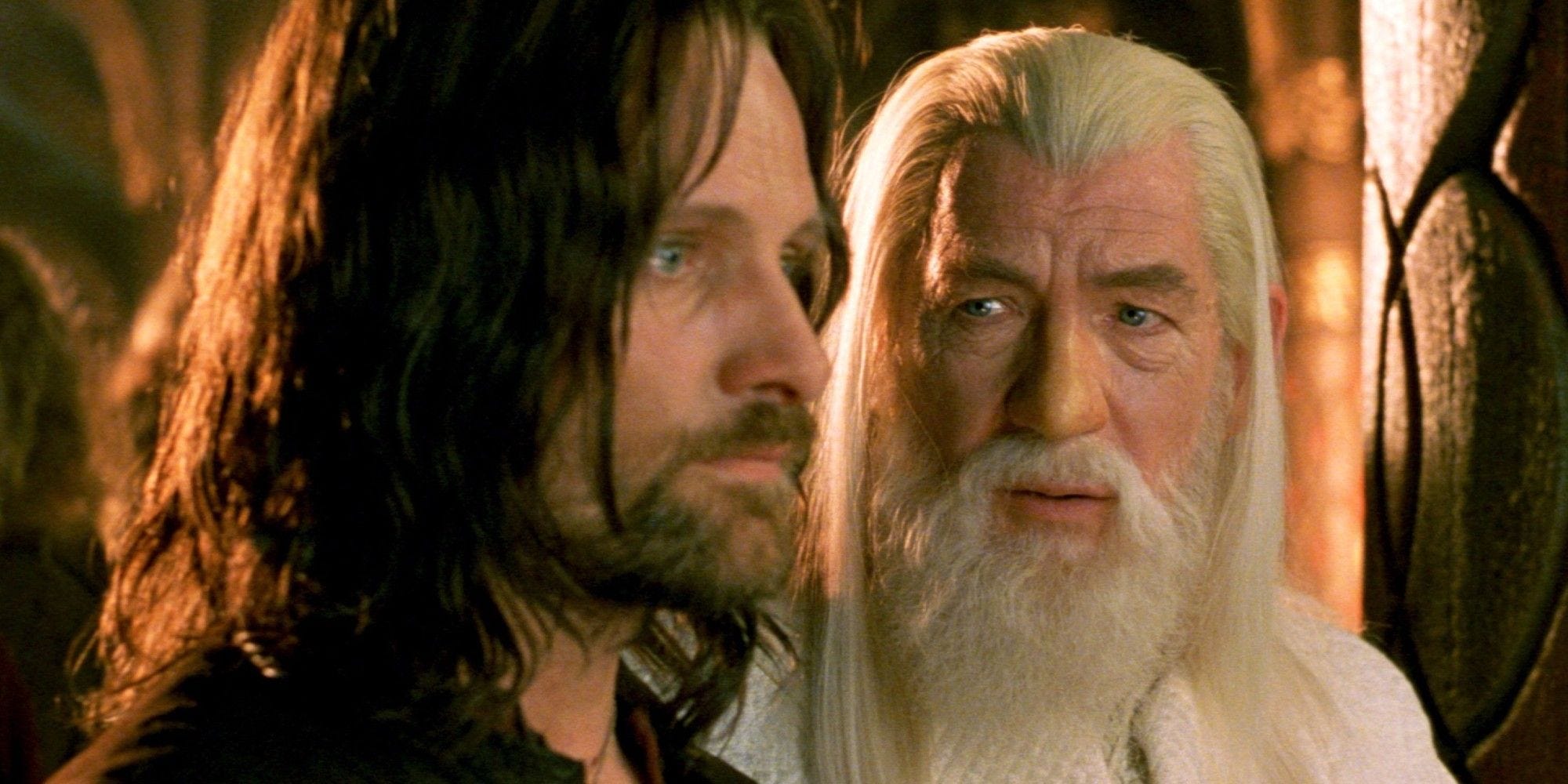
The Lord of the Rings is usually recognized as the foundation of modern fantasy literature, but it is also a great Christian moralistic text. In it, J.R.R. Tolkien wrote a profound and sustained reflection on the inherent wisdom in acting virtuously, done not through lengthy discourses but in the bones of the story itself, through the decisions and actions of the characters and their results. In Tolkien’s universe, acting virtuously is true power and true wisdom. The noblest and wisest characters are so because of their virtue, because they discern what is good and choose to do it, and in so doing are rewarded by the hidden hand of Providence. “You chose amid doubts the path that seemed right: the choice was just, and it has been rewarded,” Gandalf says to Aragorn when they meet again in Rohan.1 Becoming great is to become wise, and the successful outcome of one’s actions is dependent upon acting wisely—which means virtuously.2
Pity is a vitally important virtue in the world of The Lord of the Rings: it is pity that enables Bilbo to escape the worst effects of his possession of the Ring, and pity that leads Frodo and Sam to spare Gollum’s life and so enable the successful completion of the quest. Pity is also a characteristic of the noblest and wisest characters. What is it, exactly, for Tolkien? In its most basic sense, pity is being moved emotionally by someone else’s negative condition. But for Tolkien, pity also inescapably results in action—or deliberate inaction: “Pity must restrain one from doing something immediately desirable and seemingly advantageous.”3 At the same time, Tolkien makes clear what kind of pity is truly virtuous, since like all virtues pity can go wrong. Virtuous pity, good pity, is almost always preceded by empathy: by feeling what the object of pity is feeling, and being moved by it. This is not the same as discerning someone else’s thoughts and feelings and scorning them, or sitting in judgment on them, or using this knowledge to manipulate them. Denethor the Steward of Gondor, who is characterized by neither pity nor empathy, is also described as a man possessing keen insight into the minds of others: “He can perceive, if he bends his will thither, much of what is passing in the minds of men,” Gandalf warns Pippin in Minas Tirith.4 Yet empathy is not merely perceiving someone else’s thoughts, but allowing yourself to be affected by another’s emotion, and to allow your actions to be affected in turn.
The pity resulting from empathy is what Tolkien refers to when he talks about the virtue of pity. In the remarkable text Athrabeth Finrod ah Andreth, written by Tolkien some time after he published The Lord of the Rings, this distinction between “good” pity and “bad” pity is made explicitly. The elven prince Finrod, in conversation with the human wise-woman Andreth about mortality, expresses it like this: “Yet pity is of two kinds: one is of kinship recognized, and is near to love; the other is of difference of fortune perceived, and is near to pride.”5 Recognizing one’s kinship with the object of pity requires empathy: without it, pity is not a virtue but a vice. Pity recognizes that we are all fallible and in need of mercy: “We are assured that we must be ourselves extravagantly generous, if we are to hope for the extravagant generosity which the slightest easing, or escape from, the consequences of our own follies and errors represents.”6 The humility that pity requires is also required for the empathy from which it springs—a humility that seems to result in folly, but in fact is necessary for good to triumph. In the first part of this essay, I will examine how empathy is a character trait in the wisest characters in The Lord of the Rings. In the second, I will explain how it is critical to the success of the quest to destroy the Ring.
Galadriel and Empathy
Let us start with the greatest of the elves, Galadriel. In the Unfinished Tales, she is described in this way: “From her earliest years she had a marvellous gift of insight into the minds of others, but judged them with mercy and understanding.”7 Galadriel demonstrates this empathy in The Lord of the Rings in her encounter with Gimli in Lothlórien. When her husband Celeborn implies that the Dwarves stirred up the Balrog for no good purpose beyond their own nostalgia, Galadriel gently rebukes him: “Do not repent of your welcome to the Dwarf. If our folk had been exiled long and far from Lothlórien, who of the Galadhrim, even Celeborn the Wise, would pass nigh and would not wish to look upon their ancient home, though it had become an abode of dragons?”8 Galadriel displays understanding for Gimli’s desire to see the ancestral home of his people, and affirms it as something that she and her husband would feel as well.
Then she adds something that is a direct echo of Gimli’s own words on two occasions. First, when he sees the landscape around Moria while the Fellowship is still west of the Mountains, he exclaims, “Dark is the water of Kheled-zâram…and cold are the springs of Kibil-nâla. My heart trembles at the thought that I may seen them soon;”9 and second, when in Moria itself he sings a song about it, one verse of which runs:10
The world was fair, the mountains tall,
In Elder Days before the fall
Of mighty kings in Nargothrond
And Gondolin, who now beyond
The Western Seas have passed away:
The world was fair in Durin’s Day.
Galadriel says to Gimli: “Dark is the water of Kheled-zâram, and cold are the springs of Kibil-nâla, and fair were the many-pillared halls of Khazad-dûm in Elder Days before the fall of mighty kings beneath the stone.”11 The implication is that Galadriel knows the song as well as Gimli, and appreciates its emotional force for the Dwarf. She then smiles at Gimli, and he perceives her empathy: “And the Dwarf, hearing the names given in his own ancient tongue, looked up and met her eyes; and it seemed to him the he looked suddenly into the heart of an enemy and saw there love and understanding.” His response shows what empathy can achieve, seen from the perspective of its recipient: “Wonder came into his face, and then he smiled in answer.”12 His devotion to Galadriel springs from this moment, a devotion that also leads to his friendship with the elf Legolas—because of empathy shown by one of the wisest inhabitants of Middle-earth.
Aragorn and Empathy
Now we turn to Aragorn, the greatest man in Middle-earth. The greatest leader, with the greatest lineage and the strongest will: but also one of the Wise. Legolas considers Aragorn after his victory at Pelargir over the Corsairs, and states: “In that hour I looked on Aragorn and thought how great and terrible a Lord he might have become in the strength of his will, had he taken the Ring to himself.”13 Sauron recognizes this too, which is why after Aragorn shows himself to the Dark Lord in the Palantir he rushes to destroy Gondor, since he fears that Aragorn wields the Ring and knows he has the innate power to do so effectively. But Aragorn is also wise, and thus cannot be a tyrant: “But nobler is his spirit than the understanding of Sauron.”14 A core element in that nobility and wisdom is his capacity for empathy.
His treatment of Éowyn displays this. She falls in love with him and Aragorn cannot return that love—but he is still affected by her emotional state. When he rides to the Paths of the Dead, he refuses her request to ride with the Dúnedain and leaves her distraught: “Then he kissed her hand, and sprang into the saddle, and rode away, and did not look back; and only those who knew him well and were near to him saw the pain that he bore.”15 And at the Houses of Healing, he reveals the extent of his perception of her state of mind:
When I first looked on her and perceived her unhappiness, it seemed to me that I saw a white flower standing straight and proud, shapely as a lily, and yet knew that it was hard, as if wrought by elf-wrights out of steel. Or was it, maybe, a frost that had turned its sap to ice, and so it stood, bitter-sweet, still fair to see, but stricken, soon to fall and die? Her malady beings far back before this day, does it not, Éomer?16
Aragorn displays a greater understanding for Éowyn than even her brother Éomer, who views her unreturned love for Aragorn as the cause of her distress. Aragorn acknowledges this part, and states:
Few other griefs amid the ill chances of this world have more bitterness and shame for a man’s heart than to behold the love of a lady so fair and brave that cannot be returned. Sorrow and pity have followed me ever since I left her desperate in Dunharrow…and no fear upon that way was so present as the fear for what might befall her.17
He is affected by her grief, not scorning it, but sharing in it. Aragorn understands Éowyn, and allows himself to be affected by her mindset; thus, when she has been healed at the end by the love of Faramir, he says to her: “It heals my heart to see thee now in bliss.”18
Aragorn also shows empathy in how he deals with those under his leadership before the last battle at the Black Gate. The hideous landscape around the entrance to Mordor causes some of his soldiers to utterly lose their nerve, and renders them unable to continue. Rather than driving them on ruthlessly, as Sauron does with his soldiers (“Where there’s a whip there’s a will!”19), Aragorn instead pities them: “Aragorn looked at them, and there was pity in his eyes rather than wrath.”20 This pity is spurred by his empathy for their plight:
For these were young men from Rohan, from Westfold far away, or husbandmen from Lossarnach, and to them Mordor had been from childhood a name of evil, and yet unreal, a legend that had no part in their simple life; and now they walked like men in a hideous dream made true, and they understood not this war nor why fate should lead them to such a pass.21
Aragorn lets them depart if they wish, and this empathy-spurred pity of his causes some to overcome their fear and go on with him, and others to leave and try to seize a lesser fortress and so retain their honour. The soldiers with whom he empathizes are encouraged and healed, not shamed.
In his possession of this quality Aragorn shows he is an eager student of the wisest being in Middle-earth, Gandalf. In the “Tale of Aragorn and Arwen,” Tolkien writes: “He became a friend of Gandalf the Wise, from whom he gained much wisdom.”22 This friendship makes Aragorn more like Gandalf, as Frodo observes to Gandalf in Rivendell: “He reminds me often of you. I didn’t know that any of the Big People were like that.”23 Aragorn indeed resembles Gandalf in many things, from his ability to appreciate and associate on equal terms with the weakest beings in Middle-earth (his joking with Merry in the Houses of Healing is a good example), his being “quick at times to sharp speech and the rebuking of folly,” (“What do you fear that I should say: that I had a rascal of a rebel dwarf here that I would gladly exchange for a serviceable orc?” he snaps at Gimli after looking in the Palantír24) and above all in his inner hope. “His face was sad and stern because of the doom that was laid on him, and yet hope dwelt ever in the depths of his heart, from which mirth would arise at times like a spring from the rock;”25 as it did in Gandalf, as Pippin saw in Minas Tirith: “In the wizard’s face he saw at first only lines of care and sorrow; though as he looked more intently he perceived that under all there was a great joy: a fountain of mirth enough to set a kingdom laughing, were it to gush forth.”26 Gandalf is the teacher of Aragorn, who seeks to mold himself in the wizard’s image; and this includes the profound empathy that characterized Gandalf’s character.
Gandalf and Empathy
Gandalf’s empathy is displayed in many places, as a necessary part of his mission: “All worthy things that are in peril as the world now stands, those are my care.”27 Worthy things like Fangorn forest: “Yes, I know him: the only wizard who really cares about trees;”28 like Bree and the Bree-folk: “ʽYou don’t know much even about them, if you think old Barliman is stupid,’ said Gandalf. ‘He is wise enough on his own ground. He thinks less than he talks, and slower; yet he can see though a brick wall in time (as they say in Bree);’”29 and like the Shire, and Hobbits: “Among the Wise I am the only one that goes in for hobbit-lore: an obscure branch of knowledge, but full of surprises. Soft as butter they can be, and yet sometimes as tough as old tree-roots.”30 His care for these things entails knowing about them, and liking them; perceiving how they see the world, and feeling along with them. Thus Gandalf was “not proud, and sought neither power nor praise, and thus far and wide he was beloved among all those that were not themselves proud.”31
Gandalf’s empathy is clearly displayed as well in his understanding of Éowyn. He says to Éomer in the Houses of Healing:
My friend…you had horses, and deeds of arms, and the free fields; but she, born in the body of a maid, had a spirit and courage at least the match of yours. Yet she was doomed to wait upon an old man, whom she loved as a father, and watch him fall into a mean dishonoured dotage; and her part seemed to her more ignoble than that of the staff he leaned on…who knows what she spoke to the darkness, alone, in the bitter watches of the night, when all her life seemed shrinking, and the walls of her bower closing in about her, a hutch to trammel some wild thing in?32
His keen perception of Éowyn’s feelings, and his recognition of their measure of truth, is part of his generous and empathetic character—part of his wisdom. And he enables Éomer to realize more fully what Éowyn has suffered in the years leading up to the War of the Ring.
This ability to perceive what someone else is feeling, and to be moved by it, is of particular importance to Gandalf’s treatment of Gollum. People having empathy for Gollum is central to the success of the quest to destroy the Ring, as we will see, and it is Gandalf who participates in this process, and his wisdom in seeking to understand and be moved by Gollum’s feelings is vindicated. But it is also fully in character, something he would do even if Gollum had no connection to the Ring. In his discussion of the history of the Ring with Frodo in Bag End, Gandalf shows how he is pre-eminent in empathy among the Wise of Middle-earth. After he relates Gollum’s story of finding the Ring in the river to Frodo, the hobbit exclaims, “Gollum? Do you mean that this is the very Gollum-creature that Bilbo met? How loathsome!” To which the wizard responds: “I think it is a sad story…and it might have happened to others, even to some hobbits that I have known.”33 Unlike Frodo, who has yet to learn empathy, Gandalf can be moved by Gollum’s plight.
And he also appreciates that Gollum is not yet wholly ruined: “He had proved tougher than even one of the Wise would have guessed – as a hobbit might…It was actually pleasant, I think, to hear a kindly voice again, bringing up memories of wind, and trees, and sun on the grass, and such forgotten things.”34 Gandalf can see that Gollum’s moral state is still conflicted. While acknowledging Gollum’s wickedness and how far he is from being “cured,” he does not give up hope. He also realizes that Gollum’s lust for the Ring and his hiding from the Sun in the depths of the Misty Mountains was itself a cause of suffering: “The thing was eating up his mind, of course, and the torment had become almost unbearable…He was altogether wretched. He hated the dark, and he hated light more: he hated everything, and the Ring most of all.”35 Gandalf, realizing the power of the Ring over Gollum, and realizing too Gollum’s diminished moral responsibility due to his being overcome by something too great for him, is able to perceive the painful effect this had on him and be moved by it. Thus when Frodo remarks, “What a pity that Bilbo did not stab that vile creature, when he had a chance!...I do not feel any pity for Gollum,” Gandalf responds, “You have not seen him…In any case we did not kill him: he is very old and very wretched.”36 Gandalf can pity Gollum because he understands and empathizes with the psychological and moral torment he is enduring.
Yet for all that empathy, and the pity it fuels, is evidence of wisdom, its role in The Lord of the Rings is more important than merely an attribute of the Wise. In particular, the empathy shown for Gollum by various characters in The Lord of the Rings is central to the plot for two reasons: first, it directly results in the successful completion of the Quest; and second, it is a key aspect of the ennoblement of the wisest of the hobbits, namely Frodo. We will explore these in the second part.
Enjoy today’s newsletter? Here’s a few from the archives you may also enjoy:



Interested in writing a guest piece like the above? Check out my submission guidelines and send me a pitch!
Special thanks to Richard R, Dan, Scott, Max K, and Erica M for becoming paid subscribers this month! If you too want to help support this newsletter and also get bonus content, consider upgrading today for just $5 a month or $50 a year!
⚔️ If someone forwarded this email to you or you found it through social media or Google, I’d like to invite you to join 15,000+ subscribers in the Jokien with Tolkien community: Subscribe here and get a free gift just for joining!
🏹 Chosen as a Substack Featured Publication in 2023
🪓 Official merch available in the Jokien with Tolkien store
❌ All typos are precisely as intended
🔗 Links may be affiliate, which is a free-to-you way to support this newsletter where I earn a small commission on items you purchase
🗃️ Can’t wait till next week for more content? View the archive
J.R.R. Tolkien, The Two Towers (London: Harper Collins, 2005), III.5, 500. (Henceforth cited as TT)
A tremendously helpful exposition of this theme of Tolkien is Matthew Dickerson, Following Gandalf: Epic Battles and Moral Victories in The Lord of the Rings (Grand Rapids: Brazos Press, 2003). I point as well to the excellent blog post by Bret Devereaux entitled, “How Gandalf Proves Mightiest: Spiritual Power in Tolkien.” https://acoup.blog/2025/04/25/collections-how-gandalf-proved-mightiest-spiritual-power-in-tolkien/
Humphrey Carpenter, ed. The Letters of J.R.R. Tolkien (New York: Houghton Mifflin, 2000), Letter 153, 191.
ROTK, V.1, 759.
J.R.R. Tolkien, Morgoth’s Ring (Boston: Houghton Mifflin, 1993), 324.
Letters, Letter 192, 253.
J.R.R. Tolkien, Unfinished Tales (London: Harper Collins, 2010), 297.
J.R.R. Tolkien, The Fellowship of the Ring (London: Harper Collins, 2005), II.7, 356. (Henceforth cited as FOTR)
FOTR, II.3, 283.
FOTR, II.4, 316.
FOTR, II.7, 356.
FOTR, II.7, 356.
ROTK, V.9, 876.
ROTK, V.9, 876.
ROTK, V.2, 785.
ROTK, V.8, 866.
ROTK, V.8, 867.
ROTK, VI.6, 977.
ROTK, VI.2, 931.
ROTK, V.10, 886.
ROTK, V.10, 886
ROTK, App. A, 1060.
FOTR, II.1, 220.
This excellent line appears in the first edition of The Return of the King. Tolkien softened Aragorn’s words in the second, although he defended it to a shocked reader. Wayne G. Hammond and Christina Scull, The Lord of the Rings: A Reader’s Companion (Boston: Houghton Mifflin, 2005), 529.
ROTK, App. A, 1060.
ROTK, V.1, 759.
ROTK, V.1, 758.
TT, III.4, 466.
FOTR, II.1, 221.
FOTR, I.2, 48.
Unfinished Tales, 505.
ROTK, V.8, 867.
FOTR, I.2, 54.
FOTR, I.2, 55.
FOTR, I.2, 55.
FOTR, I.2, 59.
Frodo's kinship with Gollum leads him to feel pity. Not kinship of race or friendship, but the kinship of being damned by the evil ring. Frodo tried to save Gollum for the hope of being saved himself.
Really enjoyed this, an aspect of LOTR I hadn't thought much about before. Looking forward to the second part. Thank you.