

Gardens in Middle‑earth: What Tolkien Teaches Us About Tending a Broken World
On the symbolic and spiritual meaning of gardens in Tolkien’s world.

Mae govannen, friends! Josh here with a guest post from Matěj Čadil. Matěj is a traditional artist and illustrator based in the beautiful city of Prague, Czech Republic, who works partly as a freelance graphic designer while also dedicating himself to his art. The world of J. R. R. Tolkien has been his greatest source of inspiration: his artwork has been published in international Tolkien-related publications and has been shortlisted multiple times for the Tolkien Society Awards. You can find him at his Substack, Visions of Middle-earth, on Etsy, and on Facebook, or Instagram.
Today I’m sharing with you all a piece he wrote on the meaning, function, and significance of gardens in Tolkien’s Middle-earth that I found insightful and fascinating. Enjoy!
Also, reminder that today is the final day to enter my Tolkien Reading Day giveaway and get 25% off a paid subscription to Jokien with Tolkien forever! More details below. See you later this week for the latest round of Middle-earth Madness!


Gardens in Middle‑earth
What Tolkien Teaches Us About Tending a Broken World
by Matěj Čadil
I keep returning to an illustration I painted back in 2018: In the Garden of Bag End. Not because of artistic quality, but because it invites reflection on the place of gardens in Tolkien’s world.
The illustration shows the conversation between Gandalf and Frodo in the chapter “The Shadow of the Past” when the truth about the One Ring is revealed. But I wanted to approach it from a different angle that how it has been illustrated: view it from the sunlit garden outside, looking through the open window into the room where Gandalf and Frodo sit in shadow, while off to the side, Sam Gamgee is trimming the lawn, eavesdropping (though there ain’t no eaves at Bag End, and that’s a fact).
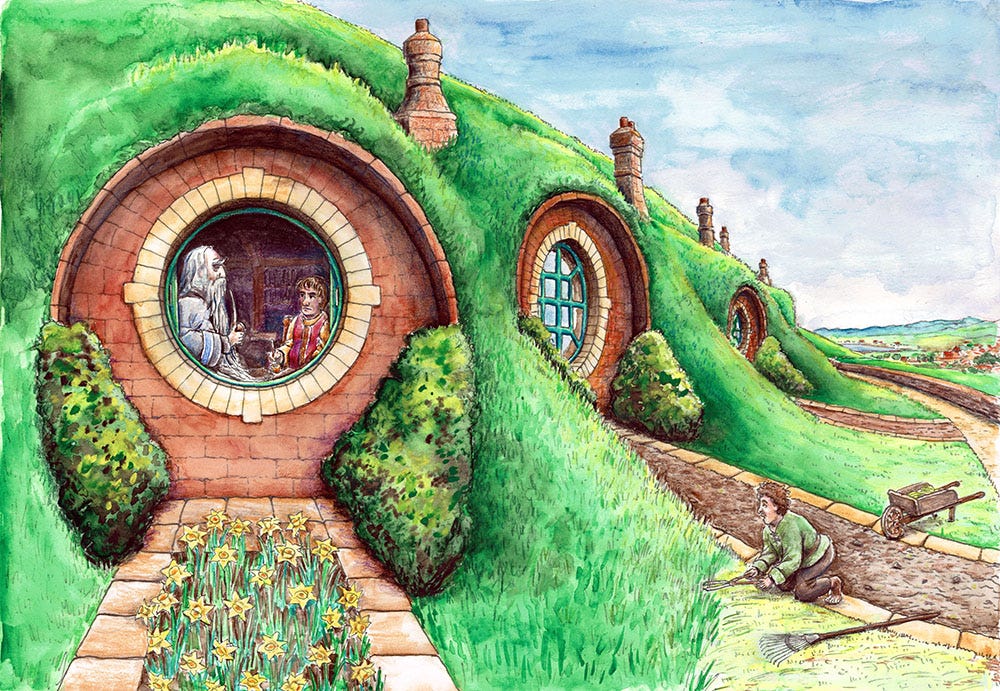
As I worked on the illustration, I found myself thinking about gardens in The Lord of the Rings. They appear in many places and they are never merely decorative. And it is no accident that Sam Gamgee, whom Tolkien singles out as the “chief hero,” is not just a servant in the usual sense, but a gardener.
I have always liked that about Sam.
I myself love gardening, although of the two gardens that I have been partially taking care of, one is a small inner courtyard garden, just a shady patch of lawn and a few bushes between tall houses. We are very grateful for such a peaceful patch of nature in the centre of Prague, but it is not exactly the place for any grand gardening ambitions. The other is the garden of our cottage in the mountains. Although it is much larger, we only stay there for a few weeks a year, so gardening is mostly limited to preventing it from being overrun by the surrounding wilderness.
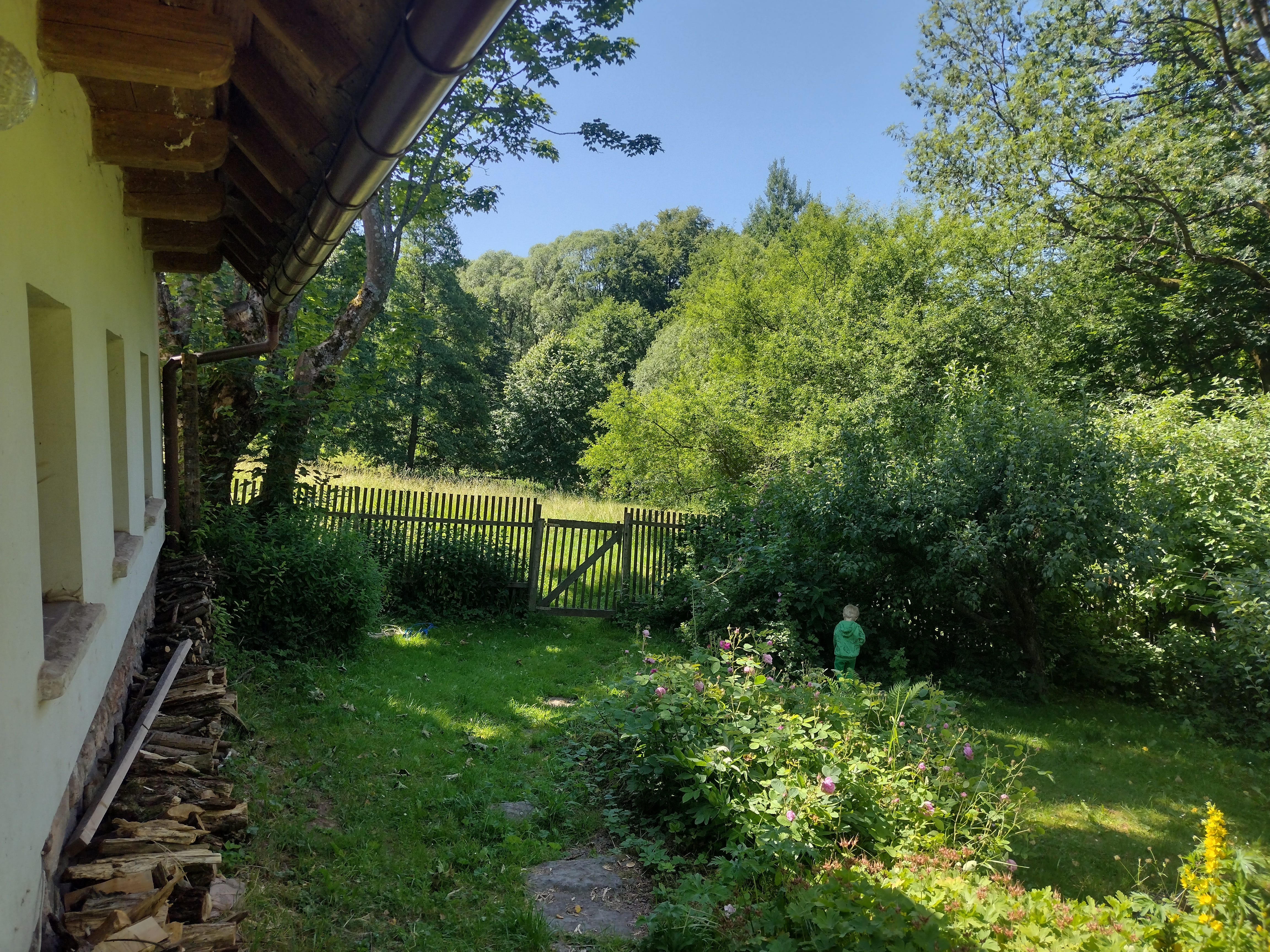
But Tolkien himself was a passionate gardener. His letters show his love of nature, especially trees and plants. In his Letter 213 he wrote: “I am in fact a Hobbit (in all but size). I like gardens, trees and unmechanized farmlands” which reflects his deep connection with gardens and simple, nature-based pleasures.
Hobbits and the love of “good tilled earth”
Already in The Hobbit we learn that Bilbo is very fond of flowers and he admires the gardens of Beorn. In the beginning of The Lord of the Rings Gandalf praises Bilbo’s garden and Bilbo confirms that he is very fond of it.1
It is striking that Bilbo and Frodo, clearly wealthy by hobbit standards, do not employ household servants. They keep their own pantries, cook their own meals, wash their own dishes and dust their own mantelpieces. But they do employ gardeners. We know Bilbo’s gardener was first Holman Greenhand, then Hamfast “The Gaffer” Gamgee, and finally Hamfast’s son Sam.
This tells us something about hobbit society. Gardening is not menial labour; it is a craft, a vocation, a point of pride. Tolkien says about the hobbits in the Prologue:
“They love peace and quiet and good tilled earth: a well‑ordered and well‑farmed countryside was their favourite haunt.”
We all know that hobbits like comfort and good meals, but they also value the steady work of tending and cultivating the land. A garden is a symbol of their ideal life: peaceful, fruitful, and lovingly maintained.
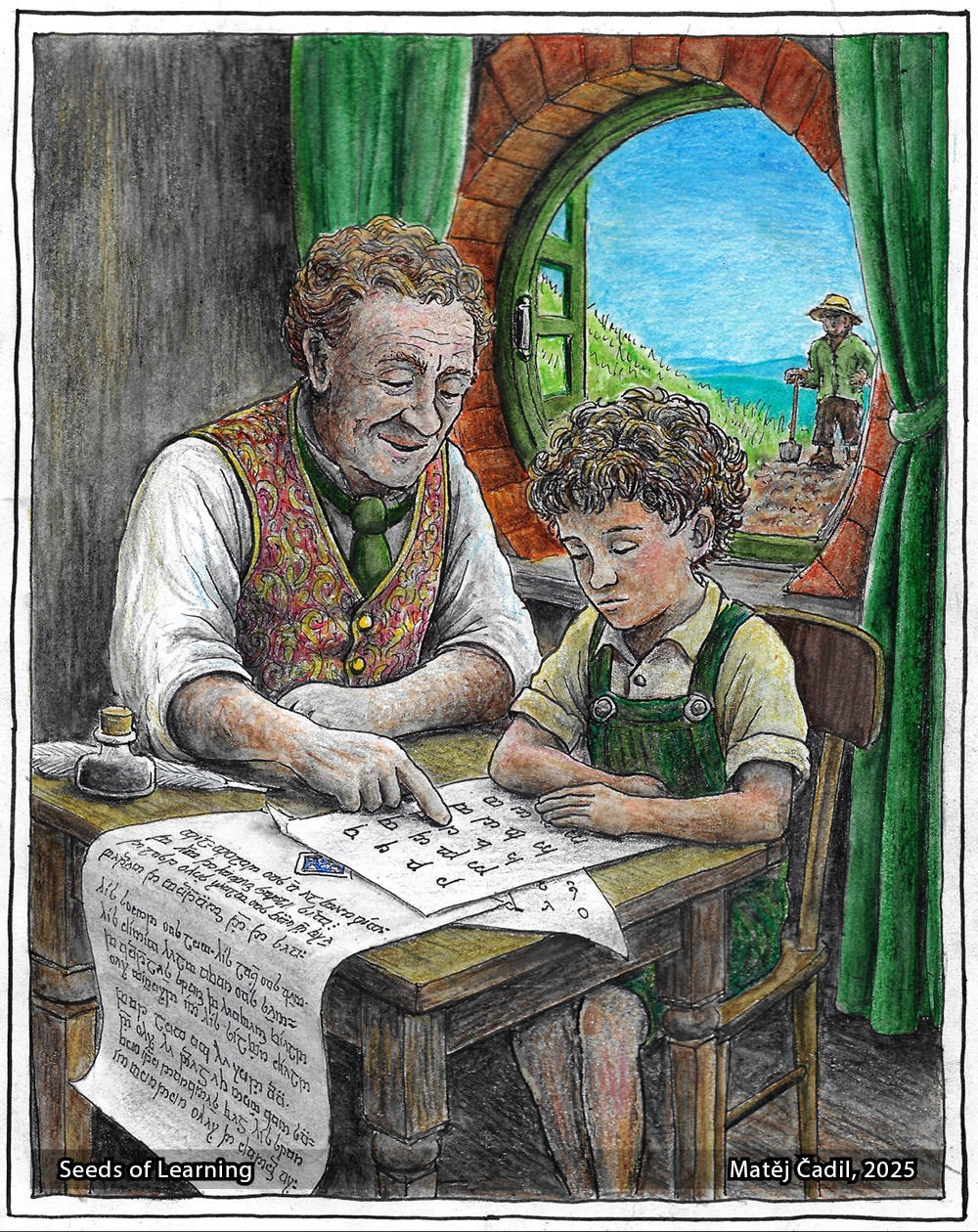
And this is recognised even outside the Shire. When Faramir meets Sam, he says with admiration: “Your land must be a realm of peace and content, and there must gardeners be in high honour.”
Faramir perceives that the Shire has achieved something Gondor longs for: a life where peace is so deeply rooted that gardeners are among the most honoured of people.
Gardens beyond the Shire: guarded places of rest
Once the hobbits leave home, gardens appear again and again, mostly in moments of respite and recovery.
The House of Tom Bombadil is described as having both a kitchen-garden and a flower-garden. They add to the impression of a peaceful place where hobbits can relax in complete safety between terrifying adventures of the Old Forest and the Barrow-downs.
In Rivendell, gardens blend with impressive natural scenery to create the overall impression of this protected refuge:
“Sam led him along several passages and down many steps and out into a high garden above the steep bank of the river. He found his friends sitting in a porch on the side of the house looking east. Shadows had fallen in the valley below, but there was still a light on the faces of the mountains far above. The air was warm. The sound of running and falling water was loud, and the evening was filled with a faint scent of trees and flowers, as if summer still lingered in Elrond’s gardens.”
The Mirror of Galadriel stands in a garden enclosed by a high green hedge on the southern slopes of the hill of Caras Galadhon.
And indeed the whole of Lothlórien feels more like a vast, enchanted garden than a wild forest. In Letter 339 Tolkien writes: “Lothlórien is beautiful because there the trees were loved.” It looks like an idyllic place, the ideal state of nature that any gardener can only dream of: “No blemish or sickness or deformity could be seen in anything that grew upon the earth. On the land of Lórien there was no stain.” It is cared for, maintained, and perfected by the elves and sustained by the power of Galadriel and her ring.
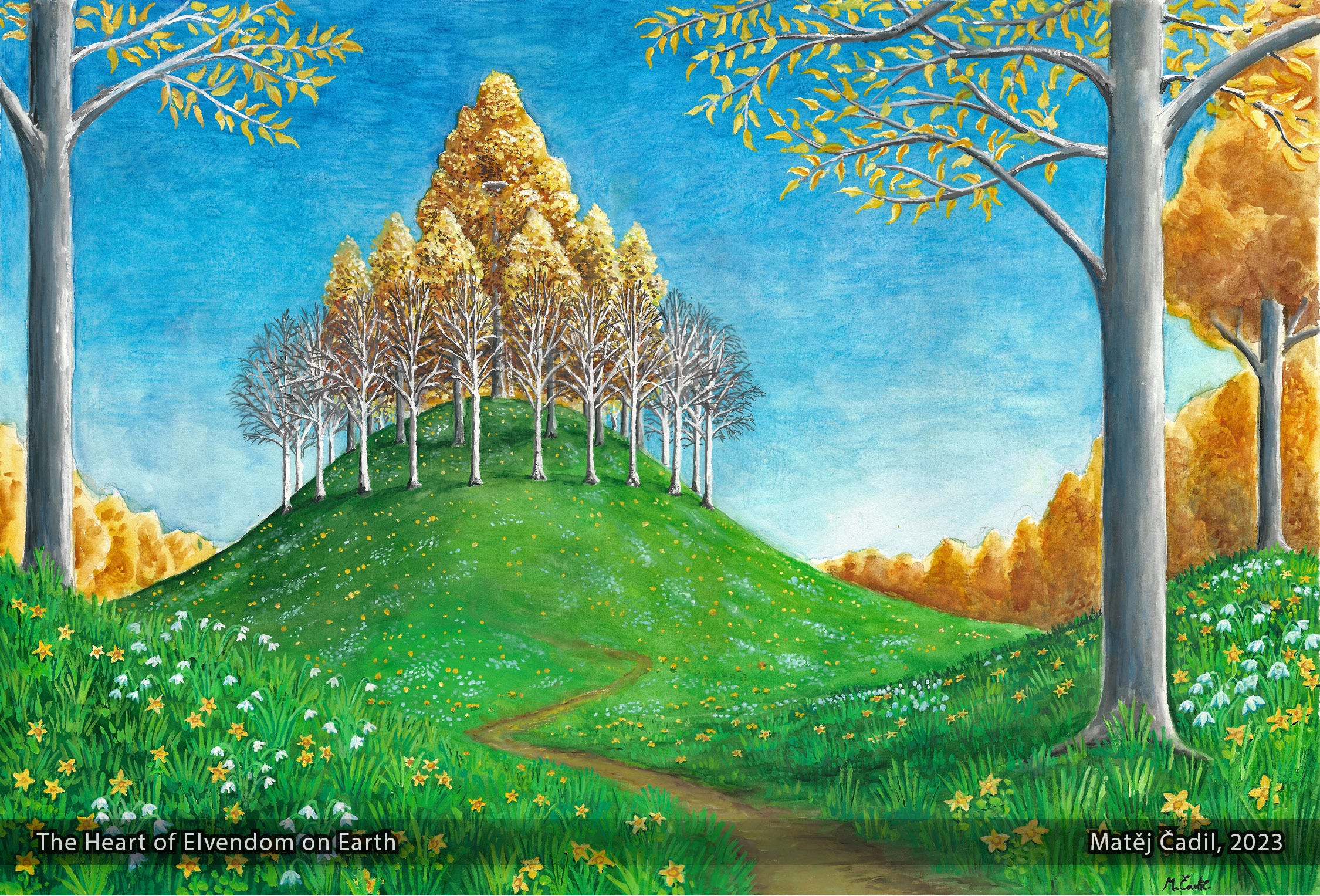
In Christian art, garden has often symbolised Paradise, the Garden of Eden. And Lothlórien seems very much like an earthly paradise.
But gardens in the Bible are also places of temptation. In the Garden of Eden, the first temptation led to humanity’s fall when Adam and Eve ate the forbidden fruit. Later, in the Garden of Gethsemane, Jesus faced the ultimate internal struggle while his disciples succumbed to the temptation of sleep.
And in Lothlórien, the characters must overcome their temptations: first, the members of the Fellowship when they are tested by Galadriel and then Galadriel herself when Frodo offers her the One Ring.
Among Galadriel’s gifts to the Fellowship there is also one garden-related gift for Sam, which will only come to fruition later in the story:
“For you little gardener and lover of trees,’ she said to Sam, ‘I have only a small gift.’ She put into his hand a little box of plain grey wood, unadorned save for a single silver rune upon the lid. ‘Here is set G for Galadriel,’ she said; ‘but also it may stand for garden in your tongue. In this box there is earth from my orchard, and such blessing as Galadriel has still to bestow is upon it. It will not keep you on your road, nor defend you against any peril; but if you keep it and see your home again at last, then perhaps it may reward you. Though you should find all barren and laid waste, there will be few gardens in Middle-earth that will bloom like your garden, if you sprinkle this earth there.’”
Ithilien, a fragrant land of herbs, flowers, resinous trees, and gentle slopes sheltered by mountains, is also called a garden in one of my favourite sentences of landscape description: “Ithilien, the garden of Gondor now desolate kept still a dishevelled dryad loveliness.” Although it is being invaded and damaged by the Enemy, it is still protected and it is a place where Frodo and Sam find a brief rest with Faramir.
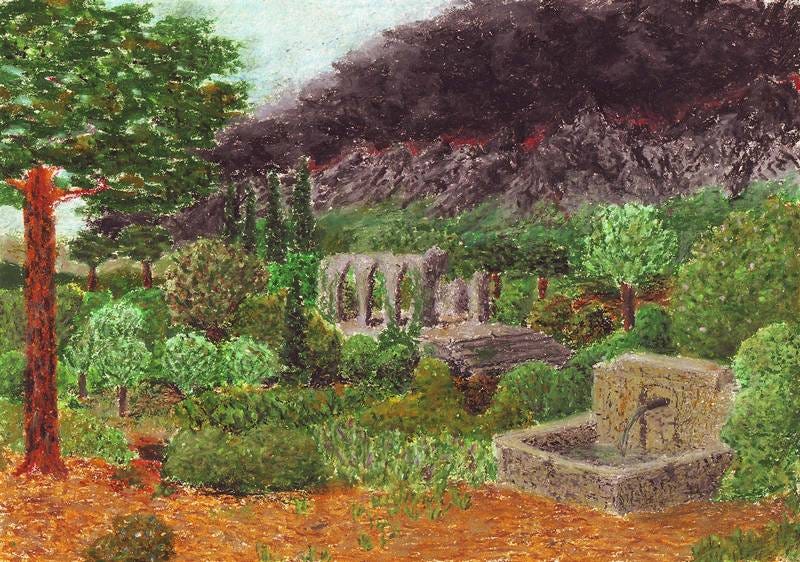
Minas Tirith doesn’t have many gardens, as Legolas remarks when he visits the city: “They need more gardens, the houses are dead, and there is too little here that grows and is glad.“
The only large garden is about the Houses of Healing in the sixth circle of the city. It is here that Faramir and Éowyn recover from their physical and mental wounds, here they experience the fall of Sauron, and here they find consolation and love in each other. The garden becomes a symbol of renewed life after long darkness.
All these places share a common thread: they are enclosed, protected, and tended.
The very word garden comes from the idea of an enclosed space, something set apart from the wild, shaped by care and intention.2 In Middle‑earth, such gardens are most often places of rest, recovery and healing.
Even in The Silmarillion, we glimpse the Gardens of Lórien in Valinor, a place of rest and renewal even for the mightiest Valar. But it is telling that during the the long wars of the Eldar and Edain against Morgoth, doomed to long defeat, no gardens are mentioned.
Gardens and forests
Now, allow me to make a brief digression. There are some gardens mentioned in The Lord of the Rings that do not quite fit into this pattern.
When Treebeard tells Merry and Pippin how Ents lost their Entwives, he explains their difference:
“the Entwives desired order, and plenty, and peace (by which they meant that things should remain where they had set them). So the Entwives made gardens to live in. But we Ents went on wandering, and we only came to the gardens now and again. ... Many men learned the crafts of the Entwives and honoured them greatly; but we were only a legend to them, a secret in the heart of the forest. Yet here we still are, while all the gardens of the Entwives are wasted.”
The gardens of the Entwives are contrasted with the wild forests of the Ents. In Letter 163, Tolkien explains his idea of Ents and Entwives as “the difference of the ‘male’ and ‘female’ attitude to wild things, the difference between unpossessive love and gardening.”
Contrasting gardening with unpossessive love sounds harsh but I don’t think Tolkien meant to say that the ways of the Entwives were bad. The problem lay in the separation of these two approaches to nature and in their inability to coexist, so that in the end neither could flourish.
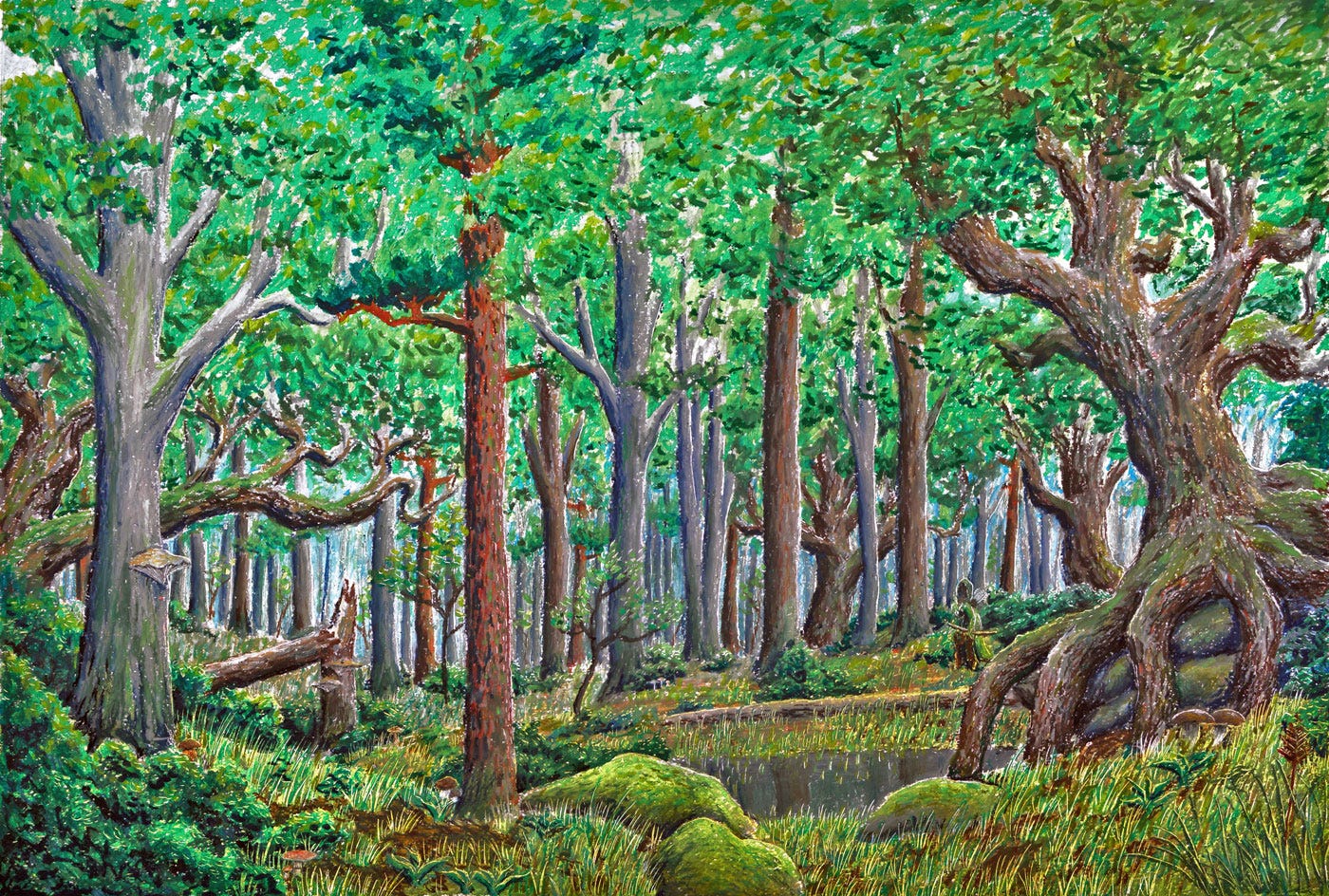
We see this tension reflected in the conflict between the hobbits of Buckland and the trees of the Old Forest. The usually peaceful gardening hobbits exacted violent revenge for the intrusion from the forest:
“In fact long ago [the trees] attacked the Hedge: they came and planted themselves right by it, and leaned over it. But the hobbits came and cut down hundreds of trees, and made a great bonfire in the Forest, and burned all the ground in a long strip east of the Hedge. After that the trees gave up the attack, but they became very unfriendly.”
And in Sam’s case, his love of gardening is a path that the Ring tries to use to tempt him:
“at his command the vale of Gorgoroth became a garden of flowers and trees and brought forth fruit. He had only to put on the Ring and claim it for his own, and all this could be.”
Fortunately, he has enough plain hobbit-sense to know that “the one small garden of a free gardener was all his need and due, not a garden swollen to a realm.”
This shows that even the love of gardens must be rightly ordered; when it grows possessive or out of balance with wild nature, it can wound rather than heal.
After the fall of Sauron: the world as a garden restored
After the War of the Ring, the new peace is portrayed by expanding the garden imagery. When Gandalf and Aragorn ascend to a high hallow and survey the land, it is described as one vast garden:
“They saw the towers of the City far below them like white pencils touched by the sunlight, and all the Vale of Anduin was like a garden, and the Mountains of Shadow were veiled in a golden mist.”
Faramir’s wish for his future with Éowyn in the time of peace is to make a garden:
“if she will, then let us cross the River and in happier days let us dwell in fair Ithilien and there make a garden. All things will grow with joy there, if the White Lady comes.”
Even Isengard, once ravaged by Saruman, is remade by the Ents into a “garden filled with orchards and trees”.3
Whereas previously gardens were places of healing in the midst of a hostile world, now new gardens are becoming a sign that the world itself is healing.
But not everywhere is healed at once.
The Scouring of the Shire: Sam’s true vocation
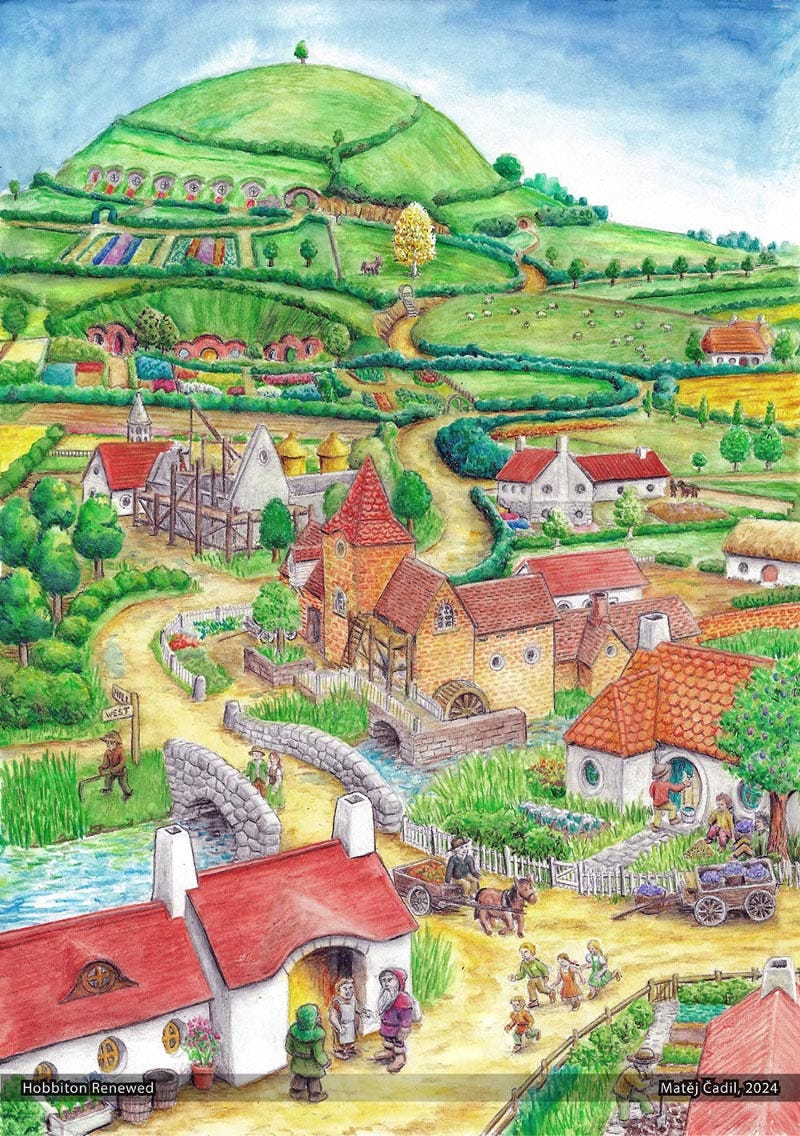
When the hobbits return home, they find the Shire befouled. Trees cut down, holes dug up, gardens ruined.
Tolkien’s choice to make Sam a gardener, not a butler or valet, now reveals its full meaning. The War of the Ring does not end with the coronation of Aragorn. It ends with full restoration.
And Sam himself understands the task ahead:
“‘I shan’t call it the end, till we’ve cleared up the mess,’ said Sam gloomily. ‘And that’ll take a lot of time and work.’”
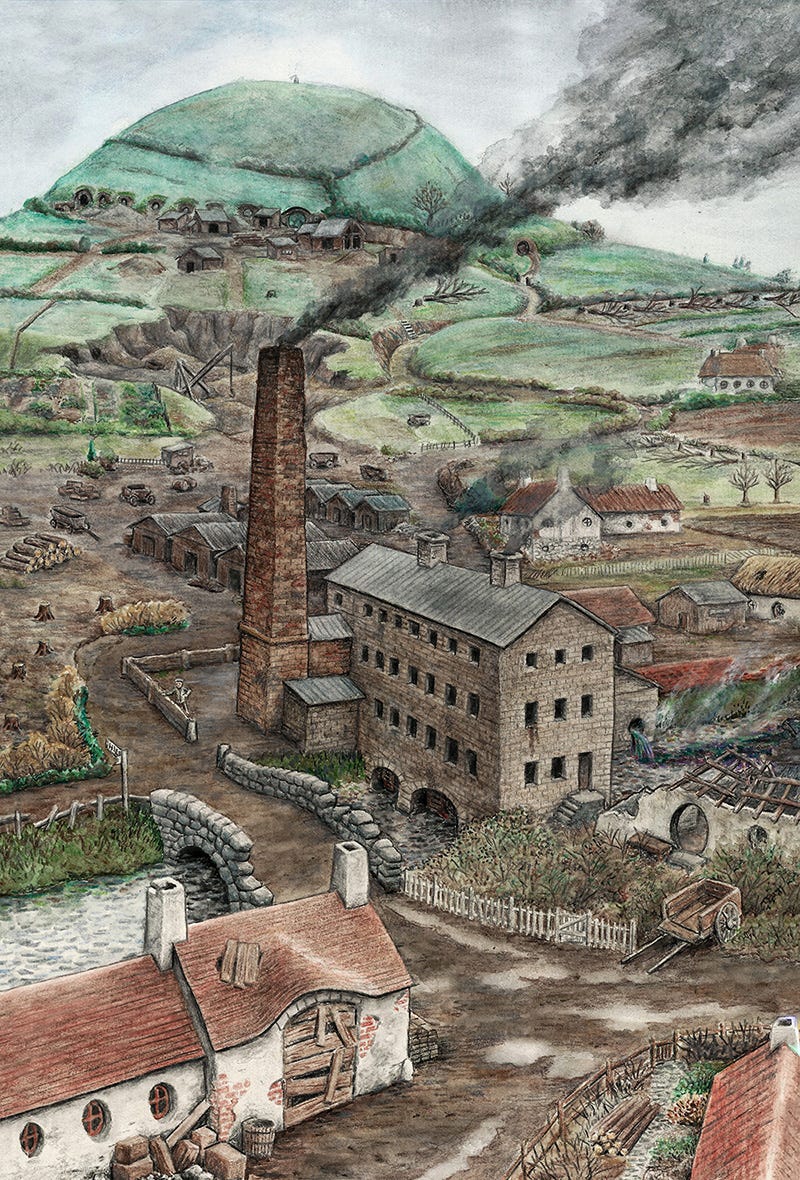
Sam’s work begins the moment the fighting stops. The labour of repair goes on apace, and Sam is kept very busy, overseeing the restoration of his old home in Bagshot Row: “The front of the new sandpit was all levelled and made into a large sheltered garden, and new holes were dug in the southward face, back into the Hill”. Even the grave of the fallen hobbits at Bywater is honoured with “a garden about it.”
But he is especially grieved by the loss of many trees, as he knows that they grow slowly and cannot be easily replaced.
“Then suddenly one day, for he had been too busy for weeks to give a thought to his adventures, he remembered the gift of Galadriel. He brought the box out and showed it to the other Travellers (for so they were now called by everyone), and asked their advice.
‘I wondered when you would think of it,’ said Frodo. ‘Open it!’
Inside it was filled with a grey dust, soft and fine, in the middle of which was a seed, like a small nut with a silver shale.”
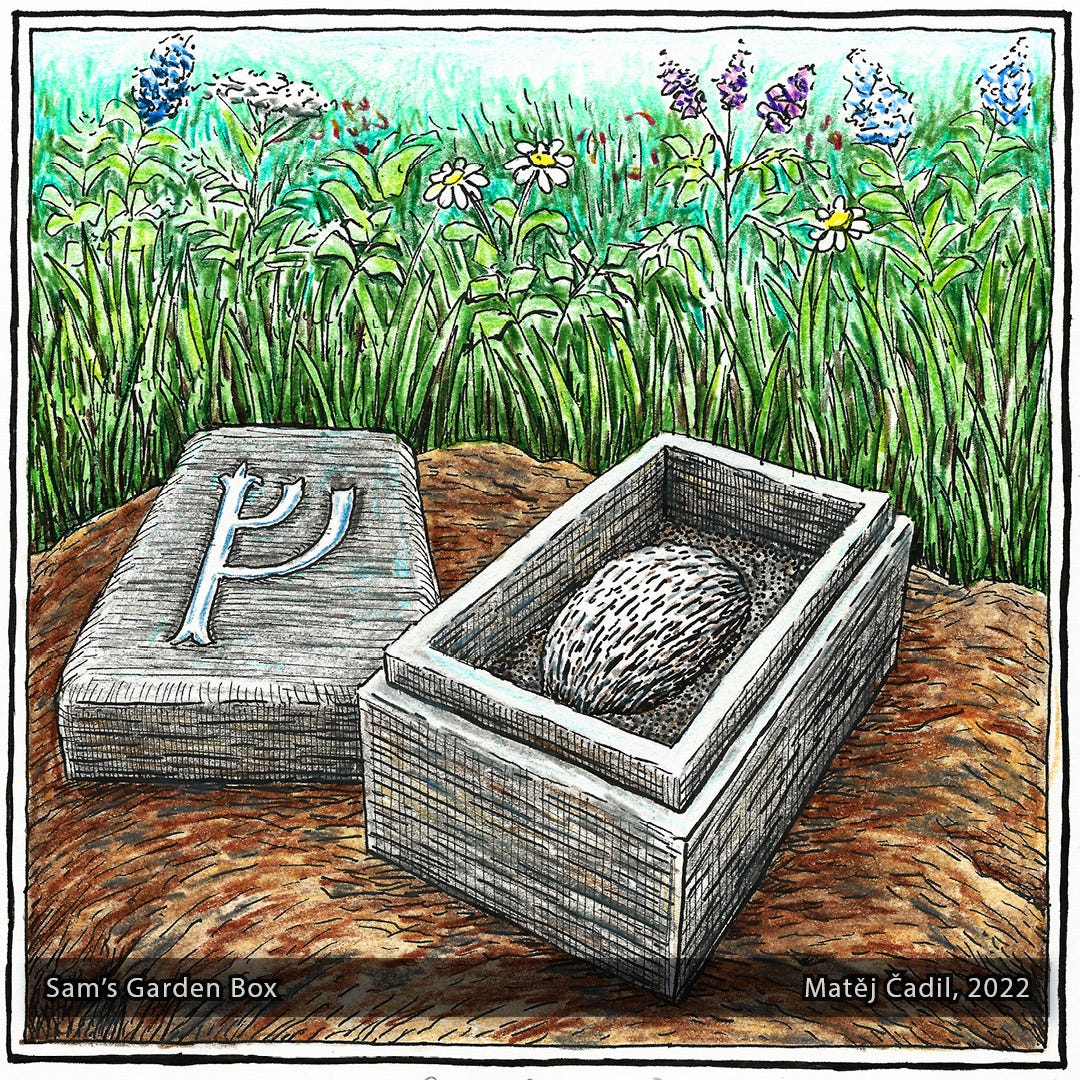
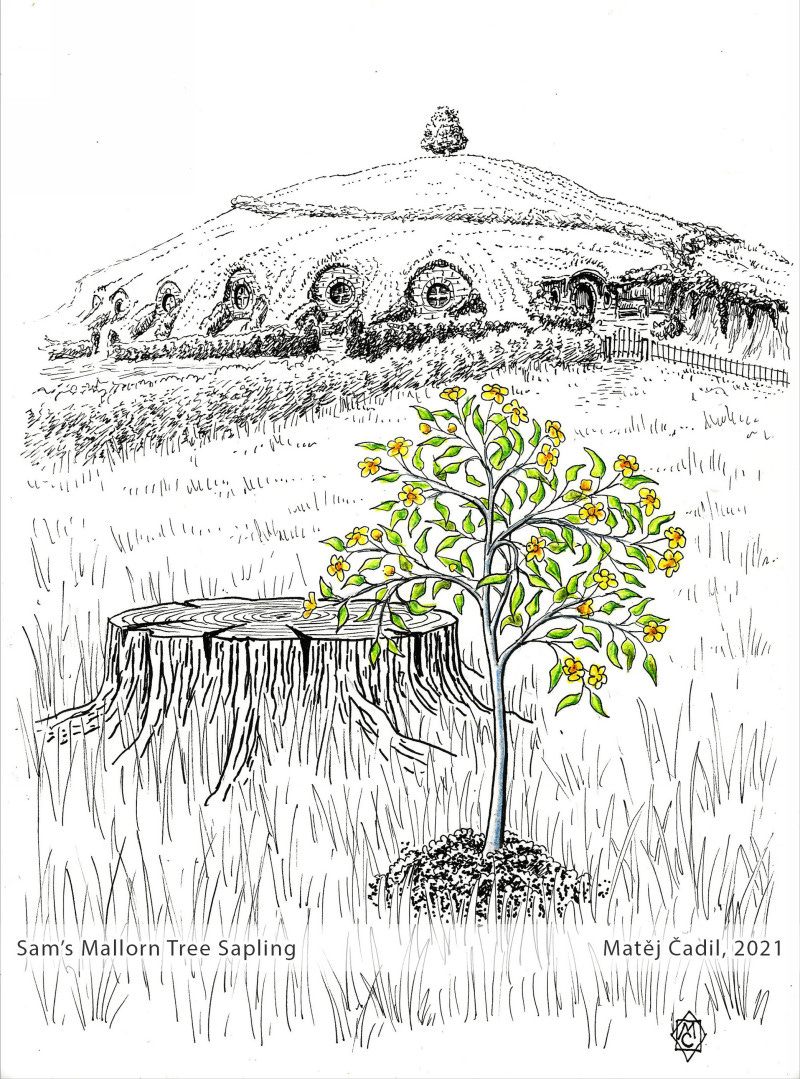
Sam uses this gift wisely. He plants the mallorn tree from Galadriel in the Party Field at Bag End in place of the felled Party Tree. He scatters the blessed earth from Galadriel’s garden throughout the Shire. And he is rewarded for his work:
“Spring surpassed his wildest hopes. His trees began to sprout and grow, as if time was in a hurry and wished to make one year do for twenty. In the Party Field a beautiful young sapling leaped up: it had silver bark and long leaves and burst into golden flowers in April. It was indeed a mallorn, and it was the wonder of the neighbourhood.”
Galadriel herself praises Sam for his work: “I hear and see that you have used my gift well. The Shire shall now be more than ever blessed and beloved.”
This is the heart of Tolkien’s vision: evil destroys, but good restores. Victory is not enough; the world must be tended back to life.
And the importance of that role is shown in Frodo’s prophetic words to Sam on their journey to the Grey Havens:
“Your hands and your wits will be needed everywhere. You will be the Mayor, of course, as long as you want to be, and the most famous gardener in history;”
Why gardens matter
For Tolkien, the garden was more than just a place of refuge. It was a symbol of good, of growth and renewal that counteract the inexorable decay of the world.
Gardens in Middle‑earth are not decorative. They are moral spaces. And Samwise Gamgee, the humblest of the Fellowship, becomes the greatest gardener. He refused the temptation of a garden swollen to a realm and he is rewarded by his beloved Shire blossoming into a beautiful garden under his care. His gardening is not a background detail. It is the thematic key to the ending of The Lord of the Rings.
The world is saved by heroes, but it is healed by gardeners. And sometimes they can be the same people.
Perhaps that is why Tolkien’s gardens linger with us: they remind us that renewal is slow, humble work and that the hands willing to tend the world are as necessary as the hands that save it.
Hey! Thanks for reading! Did you like this post? Then why not subscribe to Matěj's Substack, Visions of Middle-earth, to get more like it straight to your inbox?

📚 You can read more of my writing by reading my books! My latest is a collection of essays on The Lord of the Rings, The Silmarillion, and more of Tolkien’s works (and their adaptations). You can also find it and more of my books on Amazon or Gumroad
⚔️ If someone forwarded this email to you or you found it through social media or Google, I’d like to invite you to join 16,000+ subscribers in the Jokien with Tolkien community: Subscribe here and get a free gift just for joining!
🏹 Chosen as a Substack Featured Publication in 2023
🪓 Official merch available in the Jokien with Tolkien store
❌ All typos are precisely as intended
🔗 Links may be affiliate, which is a free-to-you way to support this newsletter where I earn a small commission on items you purchase
🎯 Interested in writing a guest piece? Check out my submission guidelines. Want to sponsor a future issue of Jokien with Tolkien? E-mail me at jrrjokien@jrrjokien.com
A missed opportunity in my picture In the Garden of Bag End was the inclusion of the flowers described in this scene: “The flowers glowed red and golden: snap-dragons and sun-flowers, and nasturtiums trailing all over the turf walls and peeping in at the round windows.” But later I made up for it by drawing all those flowers in the picture The Road Goes Ever On.
It comes from the Proto-Indo-European: *gʰordʰos (hedge, enclosure) through Proto-Germanic: *gardôn (enclosure, house, or yard). Among related words in English are yard, orchard, girdle, and garth. There are cognates in many Indo-European languages, often meaning enclosure. An interesting cognate for me is Czech hrad (“castle”). In some other Slavic languages related words like grad or horod mean “city”.
It is remarkable that by planting orchards, Ents are doing something that the Entwives would have appreciated.
 | A guest post by
|
I love this line: The world is saved by heroes, but it is healed by gardeners. And sometimes they can be the same people.
I will try my best to live it out.
I have come to love the Scottish word and practice of a "croft."